
Quick answer: First confirm the listings are the same product (model, size, bundle, condition). Then line up the total price with delivery at every store, check the price history instead of the "was" price, and weigh the seller's reviews before choosing.
Comparing products and prices properly is less about finding the absolute lowest number, and more about making sure you're comparing the right things in the first place. Skip that step, and even a careful-looking comparison can lead you astray.
Confirm you're comparing the same product
Similar-looking listings sometimes differ in size, version, bundle contents, or condition. A lower price often explains itself the moment you notice what's actually different about the offer — which means the very first step of any comparison is making sure the two things you're comparing are actually the same thing.
Line up price across every seller
Once you've confirmed it's a fair comparison, check the price across every seller offering the item. This is the most direct way to know whether a specific listing is actually competitive, rather than guessing based on one price shown in isolation.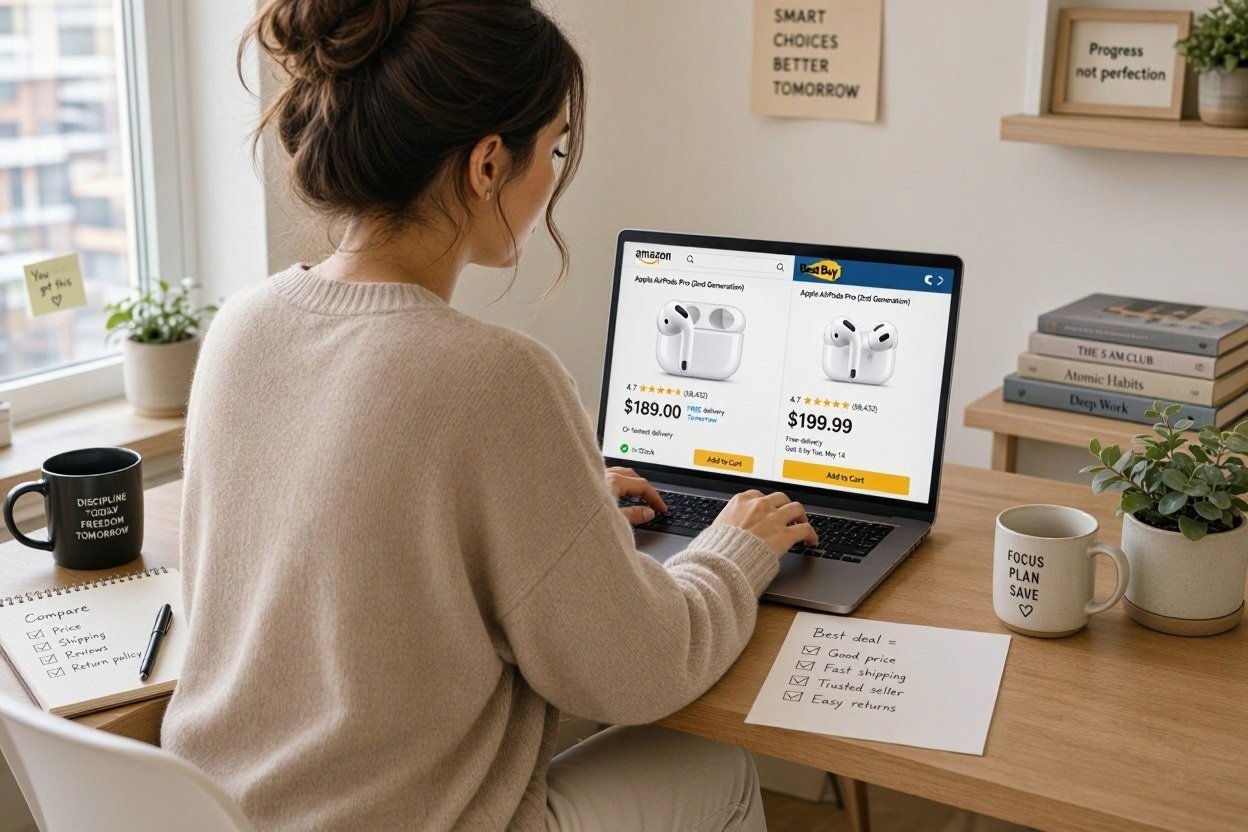
Look past the sticker price
Check what each seller's return policy and warranty actually cover. A slightly higher price from a seller with a real, generous return policy is often the better deal once something needs to be sent back — the sticker price is only part of the real cost of a purchase.
Use price history instead of trusting a "was" price
A genuine discount shows up as a real, sustained drop from a price the product was actually selling at — not a number that only ever appeared for one day, right before the "sale" started. Where price history is available, it turns a guess into a fact.
Factor reviews into the comparison itself
Don't treat reviews as a separate step from price comparison — they're part of the same decision. A cheaper listing with a pattern of complaints about the exact issue you'd be most affected by isn't actually the better-priced option once you account for the real risk involved.
A practical example
Imagine three sellers listing what looks like the same pair of headphones. Seller A is the cheapest, with no reviews and a vague description. Seller B is slightly more expensive, with dozens of detailed reviews and a 30-day return window. Seller C is the most expensive, matching Seller B's reviews almost exactly, with no meaningful difference in the product itself.
A price-only comparison picks Seller A. A proper comparison picks Seller B — enough of a track record to trust, without paying the premium Seller C is charging for essentially nothing extra. This is the entire point of comparing more than just the number on the page.
Comparing well takes a few extra minutes. It's consistently the difference between a purchase you're glad you made and one you second-guess the moment it arrives.
Compare prices on Fashnal
Fashnal does the lining-up for you: a product page lists the offers from several stores, cheapest first, with a link to each. Today's deals only shows real price drops, and the price check tells you whether a price you found elsewhere is a good one.
A worked example: comparing prices for the same sneakers
You find the same sneaker at three stores: $89 with $10 shipping, $95 with free shipping, and $79 from a marketplace seller with 14-day delivery and no returns. Confirm it is the same model and colour code first; then add delivery. The real comparison is $99, $95 and $79. The cheapest saves $16, but you lose returns, which matters for shoes. The middle offer is the best balance: free delivery, quick, returnable.
On Fashnal the offers for a product appear on one page, so you can make this comparison in a minute instead of opening three tabs.
Watch prices instead of guessing
If you are not in a hurry, do not guess whether a price is good: watch it. Set a price alert for the product and you will hear when it drops. Prices for many products move several times a year, around sales seasons and new model launches. Waiting a few weeks for a real drop often saves more than any discount code.
Frequently asked questions
What is the best way to compare prices online?
Use a price comparison site to see several stores at once, then check delivery costs and return terms of the cheapest two.
Why do prices for the same product differ so much?
Stores differ in stock, shipping, bundles and promotions. Some listings are older models or refurbished.
How do I know if a discount is real?
Compare the price with its recent history and with other stores. A big "was" price alone proves nothing.
Comments (0)
No comments yet. Be the first to share your thoughts.
Sign in to comment