
Quick answer: The best value is the lowest cost per use, not the lowest price. Divide the price by how often you will use the item, compare that across options, and check the real price history before you trust a discount.
Value and price are not the same thing, and mixing them up is one of the most common shopping mistakes there is. The cheapest option is sometimes the best value available — and sometimes it's the most expensive way to solve a problem twice, once now and again in six months.
Think in cost-per-use, not cost-per-purchase
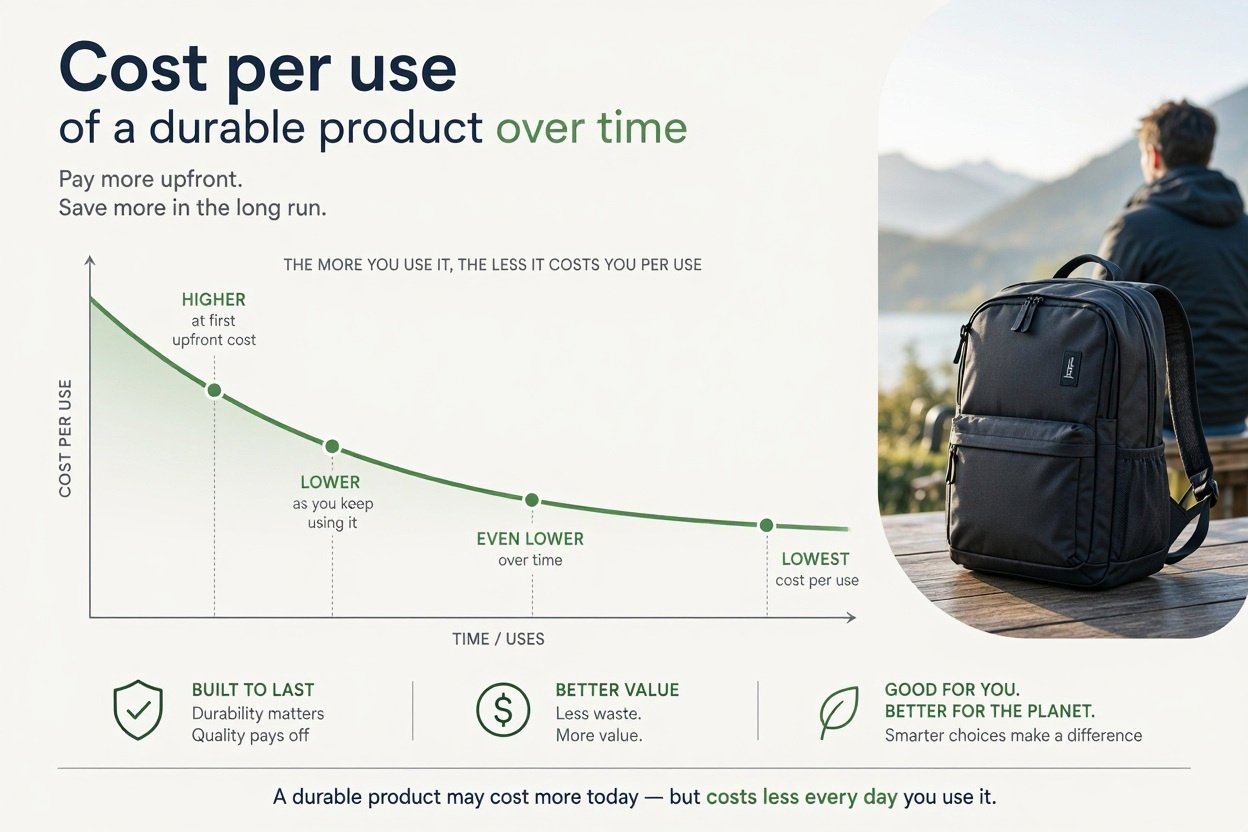
A $120 pair of shoes that lasts three years is cheaper, per year of use, than a $40 pair you replace every six months. This kind of math is especially worth doing for anything you'll use often, or for a long time — daily-use items are exactly where the sticker price lies to you the most about the real cost.
The same logic applies in the other direction. A premium tool you'll use once is rarely worth its price, no matter how well it's built — cost-per-use punishes rare use just as much as it rewards frequent use.
Separate "nice to have" from "actually needed"
Extra features often mean extra cost, and a lot of them go unused. Before paying more for a higher tier of anything, ask yourself honestly whether you'll actually use the difference, or whether you're paying for a number on a spec sheet that won't change your day-to-day experience at all.
Compare before you decide a price is fair
Without a reference point, almost any number can look like a good deal. Comparing the same product across multiple sellers before deciding gives you the reference point you actually need — that's exactly why a side-by-side comparison exists in the first place, rather than trusting a single listing's framing of its own price.
Be skeptical of urgency
"Only 2 left" and countdown timers are designed to shortcut the comparison step, not help you make a better decision. A good deal today is usually still a reasonable deal tomorrow, once you've actually had time to check it properly. Urgency messaging is a signal to slow down, not speed up.
Use real price history, not a "was" price
Watch for genuine discounts using price history rather than trusting a "was" price at face value. A real price drop — one that shows a product actually selling at a higher price for a sustained period before the discount — is the strongest signal that something is genuinely a good time to buy, rather than just marketed as one.
Smart shopping isn't about spending the least amount of money possible. It's about knowing exactly what you're paying for, and being sure it's worth it to you specifically — not to an average shopper, to you.
Examples of good cost per use
Some products cost more up front but last for years, so the cost per use ends up very low:
| Product | Why it is good value | Where to look |
|---|---|---|
| Cast iron skillet | Lasts for decades and works on any stove and in the oven. | Lodge 10.25-inch skillet on Amazon |
| Insulated tumbler | Replaces hundreds of paper cups; dishwasher safe. | YETI Rambler 20 oz on Amazon |
| Everyday mug | Used daily for years. | Compare mugs on Fashnal |
To check whether a discount is real, use Fashnal's price check or see today's deals, which only show real price drops.
How to calculate cost per use
Estimate how often you will use the item and for how long, then divide the price by the number of uses. A $30 frying pan that warps after one year of use three times a week costs about $0.19 per use. A $60 cast iron pan used for ten years costs about $0.04. Even if you are not sure of the numbers, a rough estimate is enough to see which option is cheaper over time.
Cost per use works best for things you use often: shoes, coats, bags, kitchen tools, headphones, mattresses. It matters less for things you use once, like a party outfit, where the lowest price is often the right answer.
When cheap is the smart choice
Value does not always mean premium. Buy the cheaper option when you are trying something new and may not stick with it, when a product changes fast (phone cables, children's clothes they will outgrow), or when the expensive version only adds a brand name. Pay more when failure is costly or annoying, when you will use the item daily, or when a longer warranty covers you for years.
Frequently asked questions
What does cost per use mean?
The price divided by the number of times you use the item. A $120 pair of shoes worn 300 times costs $0.40 per wear.
Is a "was" price reliable?
Not always. Some stores show an inflated old price. Check the price history or compare other stores.
Should I always buy the premium option?
No. Buy premium only where you use something often or where failure is costly, such as shoes, mattresses or tools.
Keep reading
- Online Shopping Mistakes to Avoid: 7 Habits That Cost You Money
- How to Compare Products Before Buying: A 10-Point Checklist
- Smart Online Shopping Tips: Choose, Compare and Buy in 3 Stages
As an Amazon Associate, Fashnal earns from qualifying purchases. If you buy through an Amazon link on this page, we may earn a small commission at no extra cost to you. Prices on Fashnal compare offers from several stores.
Comments (0)
No comments yet. Be the first to share your thoughts.
Sign in to comment