
Gift-giving in South Korea at a glance
In South Korea a gift is a way of showing respect, especially to older people, and the two big gift seasons are Seollal (Lunar New Year) and Chuseok (the autumn harvest festival). A good gift is practical and nicely presented, it is handed over with both hands, and sets of four are avoided because the word for "four" sounds like the word for "death".
- Biggest gift occasions: Seollal and Chuseok, when families and companies exchange gift sets.
- Good host gift: fruit, good-quality sweets, tea, or something from your home country.
- Avoid: sets of four, writing a person's name in red ink, and very expensive gifts that create an obligation.
- Open the gift: usually later, not in front of the giver.
When do people in South Korea give gifts?
Seollal and Chuseok: the gift-set seasons
Before Seollal and Chuseok, department stores and supermarkets fill with seonmul (gift) sets: premium fruit such as Korean pears and apples, hanwoo beef, red ginseng, traditional sweets (hangwa), sesame oil and seasoned laver, and the famous canned-ham gift sets, which Koreans give without irony because they are practical and loved. Employees often receive a set from their company, and families bring sets when they visit relatives. At Seollal, children bow deeply to their elders (sebae) and receive sebaetdon, New Year money, usually in a small envelope.
Birthdays, weddings and the "days" of the year
Money in an envelope is the normal gift at weddings and funerals. Young people also celebrate a calendar of smaller gift days: Valentine's Day, White Day on 14 March, and Pepero Day on 11 November, when friends give each other the stick-shaped chocolate biscuits.
Visiting someone's home
Never arrive empty-handed. A box of fruit, a cake, good tea or a bottle of something to drink is usual. For a housewarming, practical gifts such as toilet paper or laundry detergent are traditional: the paper is said to make things "unroll" smoothly, and the bubbles of detergent stand for growing fortune.
What to give: gifts people in South Korea appreciate
Koreans value gifts that are useful, of good quality and beautifully presented. Food and drink are always safe. A gift from your own country, with a short story about it, is a lovely gesture. Home goods work too, from mugs and cups for a tea lover to home fragrance for a new apartment. Price matters less than care: research on gift giving finds that recipients care much less about the price than givers expect (Flynn & Adams, 2009).
What not to give: gift taboos in South Korea
- Anything in fours: the Sino-Korean word for four, sa, sounds like the word for death. Give three or five instead.
- A name written in red ink: red ink was traditionally used for the names of the dead, so do not write a card or name tag in red.
- Shoes for a partner: a folk belief says the person will "walk away" from you in them.
- Knives or scissors: sharp objects can suggest cutting a relationship.
- A visible price tag: remove it; showing the price is considered tactless.
How to give a gift in South Korea
Offer and receive gifts with both hands, or with your right hand supported by the left, and a slight nod to an older person (Evason, 2025). Wrapping matters: bright paper, or a traditional bojagi wrapping cloth, shows care. The recipient may politely refuse once before accepting, and will usually put the gift aside to open later. Give back on the next occasion: like gift giving everywhere, it builds a relationship over time rather than settling a debt (Sherry, 1983; Camerer, 1988).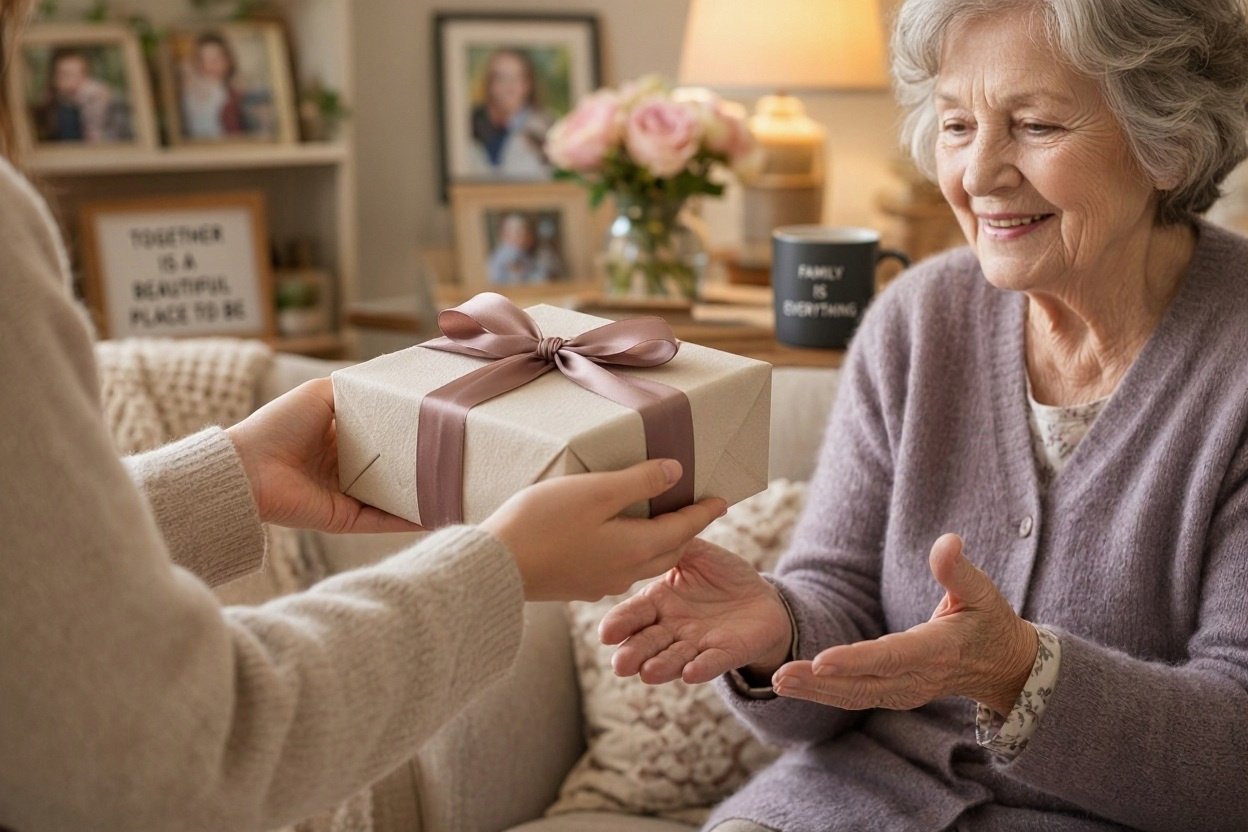
5 gift ideas inspired by South Korea
| Gift | Why it fits | Where to look |
|---|---|---|
| Korean red ginseng gift set | A classic Seollal and Chuseok gift for parents and elders. | See on Amazon |
| Bojagi wrapping cloth | Wrap your gift the traditional, reusable way. | See on Amazon |
| Premium tea set | Safe and elegant for a host or a colleague. | Compare cups on Fashnal |
| Korean skincare gift set | K-beauty is a popular and practical present. | See on Amazon |
| Scented candle | A warm housewarming gift for a new home. | Compare on Fashnal |
Frequently asked questions
What is a good gift to bring to a Korean home?
Fruit, a cake, good tea or a gift from your home country, wrapped nicely and given with both hands.
Why is the number four avoided in Korea?
In Korean the Sino-Korean word for four sounds like the word for death, so sets of four are avoided, just as in China and Japan.
Do Koreans open gifts right away?
Usually not. The gift is often put aside and opened later, in private.
More gift traditions around the world
Read how gifts are given in Japan, Germany and Mexico, or see all our guides to gift-giving around the world.
As an Amazon Associate, Fashnal earns from qualifying purchases. If you buy through a link on this page, we may earn a commission at no extra cost to you.
References
- Evason, N. (2025). Etiquette. In South Korean Culture. The Cultural Atlas (SBS). culturalatlas.sbs.com.au
- Sherry, J. F., Jr. (1983). Gift giving in anthropological perspective. Journal of Consumer Research, 10(2), 157–168. https://doi.org/10.1086/208956
- Camerer, C. (1988). Gifts as economic signals and social symbols. American Journal of Sociology, 94, S180–S214. https://doi.org/10.1086/228946
- Flynn, F. J., & Adams, G. S. (2009). Money can't buy love: Asymmetric beliefs about gift price and feelings of appreciation. Journal of Experimental Social Psychology, 45(2), 404–409. https://doi.org/10.1016/j.jesp.2008.11.003
- Chan, C., & Mogilner, C. (2017). Experiential gifts foster stronger social relationships than material gifts. Journal of Consumer Research, 43(6), 913–931. https://doi.org/10.1093/jcr/ucw067
Comments (0)
No comments yet. Be the first to share your thoughts.
Sign in to comment