
Gift-giving traditions in Greece at a glance
In Greece gifts follow birthdays, holidays and, very often, name days. A visit means a small token for the host, and New Year's Day brings the vasilopita with its lucky coin. This guide covers gift-giving traditions in Greece and the etiquette around them.
- Gift occasions: birthdays, holidays and name days (Evason, 2025).
- Good host gift: flowers, sweets or wine.
- Avoid: knives or scissors, which are seen as bad luck.
- New Year: the vasilopita cake hides a lucky coin, the flouri (Visit Greece).
When do people in Greece give gifts?
Name days
Many Greeks celebrate the feast day of the saint they are named after. Gifts are exchanged on birthdays, holidays and these name days (Evason, 2025), so a person named after a popular saint may share the day with many friends.
New Year's Day and the vasilopita
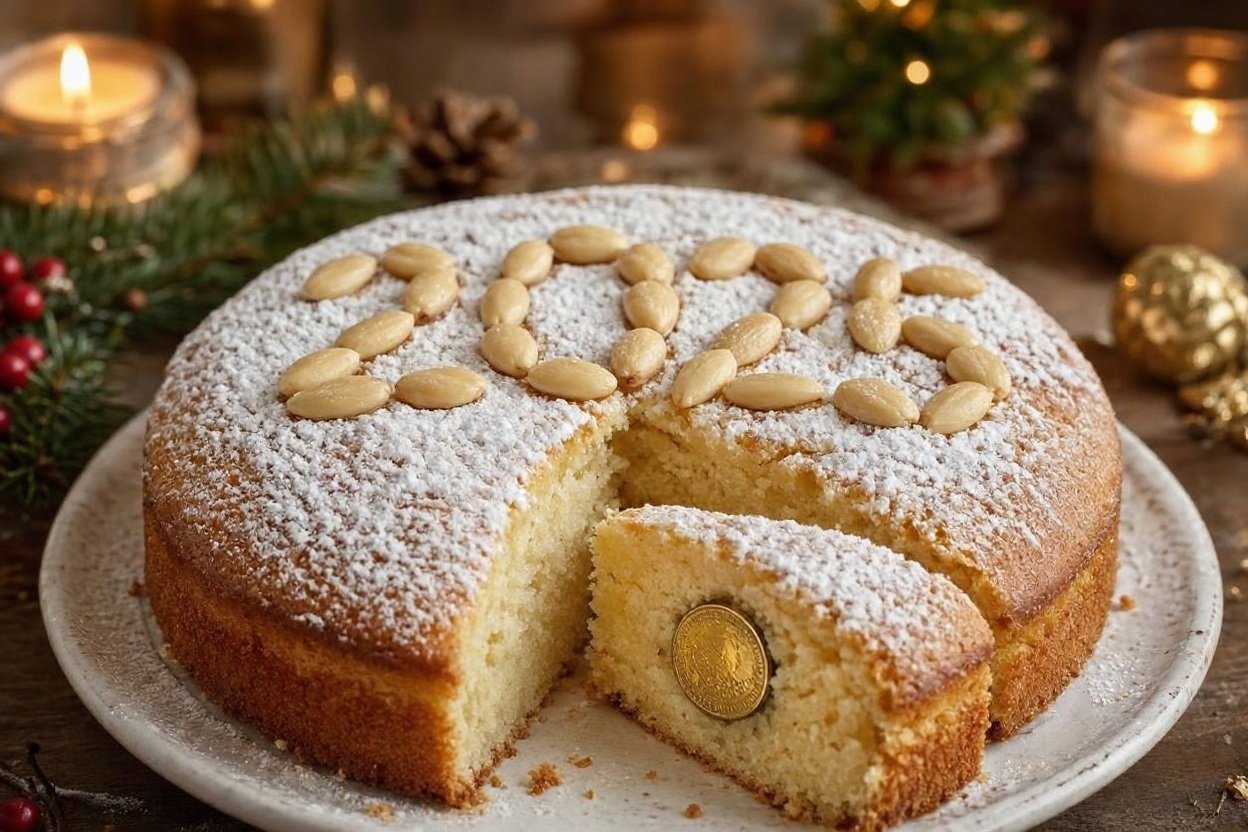
On New Year's Day almost every household cuts the vasilopita, Saint Basil's cake. Recipes vary by region, from sweet bread to pies, but all have the flouri, a coin placed in the dough. The person who finds it is believed to have good fortune all year (Visit Greece).
Visiting a home
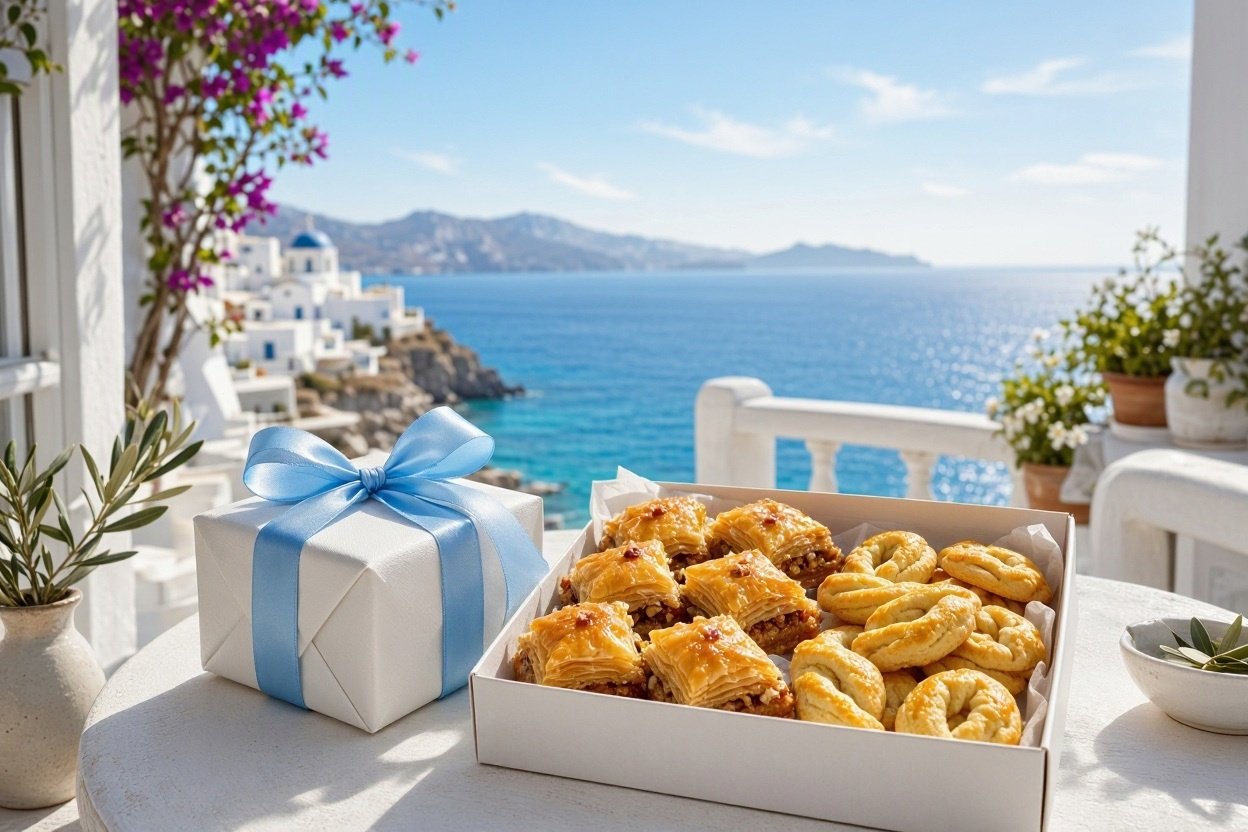
A gift is not essential, but a small gift of flowers, sweets or wine is a thoughtful gesture. Expect warm hospitality and accept what the host offers (Evason, 2025).
What to give: gifts people in Greece appreciate
Something to share at the table: pastries, good chocolates, wine for those who drink, or something for the home. Keep it modest: an expensive gift can make the receiver feel unable to reciprocate (Evason, 2025). The thought counts more than the price (Flynn & Adams, 2009). Compare dinnerware and candles on Fashnal.
What not to give: gift taboos in Greece
- Knives or scissors: considered bad luck (Evason, 2025).
- A very expensive gift: it can put the receiver in an awkward position.
How to give a gift in Greece
Give the gift in person with warm words, and on a name day add a wish such as "Chronia polla" ("many years"). A gift keeps a relationship going from year to year (Sherry, 1983).
5 gift ideas inspired by Greece
| Gift | Why it fits | Where to look |
|---|---|---|
| Greek olive oil gift set | A food gift for a host who loves to cook. | See on Amazon |
| Greek honey | A traditional sweet treat to share. | See on Amazon |
| Evil eye (mati) bracelet | A popular small token. | See on Amazon |
| Dinnerware set | For long family meals. | Compare on Fashnal |
| Scented candles | A small gift for the home. | Compare on Fashnal |
Frequently asked questions
What is a name day in Greece?
The feast day of the saint a person is named after, celebrated much like a birthday, often with small gifts.
What is the coin in the vasilopita?
The flouri, a coin baked into the New Year cake. Whoever finds it is said to have luck all year.
What should I not give in Greece?
Knives or scissors, which are seen as bad luck, and very expensive gifts.
More gift traditions around the world
Read how gifts are given in Italy, Spain and France, or see all our guides to gift-giving around the world.
As an Amazon Associate, Fashnal earns from qualifying purchases. If you buy through a link on this page, we may earn a commission at no extra cost to you.
References
- Evason, N. (2025). Etiquette. In Greek Culture. The Cultural Atlas. theculturalatlas.org
- Visit Greece (Greek National Tourism Organisation). St. Basil’s Cake. visitgreece.gr
- Sherry, J. F., Jr. (1983). Gift giving in anthropological perspective. Journal of Consumer Research, 10(2), 157–168. https://doi.org/10.1086/208956
- Flynn, F. J., & Adams, G. S. (2009). Money can't buy love: Asymmetric beliefs about gift price and feelings of appreciation. Journal of Experimental Social Psychology, 45(2), 404–409. https://doi.org/10.1016/j.jesp.2008.11.003
Comments (0)
No comments yet. Be the first to share your thoughts.
Sign in to comment