
Gift-giving traditions in Spain at a glance
In Spain the biggest gift day for children is not Christmas but Epiphany, 6 January, when the Three Kings bring presents. Adults tend to share: a host gift is something everyone can enjoy at the table. This guide covers gift-giving traditions in Spain and the etiquette around them.
- Biggest gift day: 6 January, Día de los Reyes Magos (Lonely Planet).
- Good host gift: wine, chocolates or pastries that can be shared (Evason, 2025).
- Avoid: white lilies and chrysanthemums (funeral flowers); red roses only for romance.
- Open the gift: right away, in front of the giver.
When do people in Spain give gifts?
Los Reyes Magos, 5 and 6 January
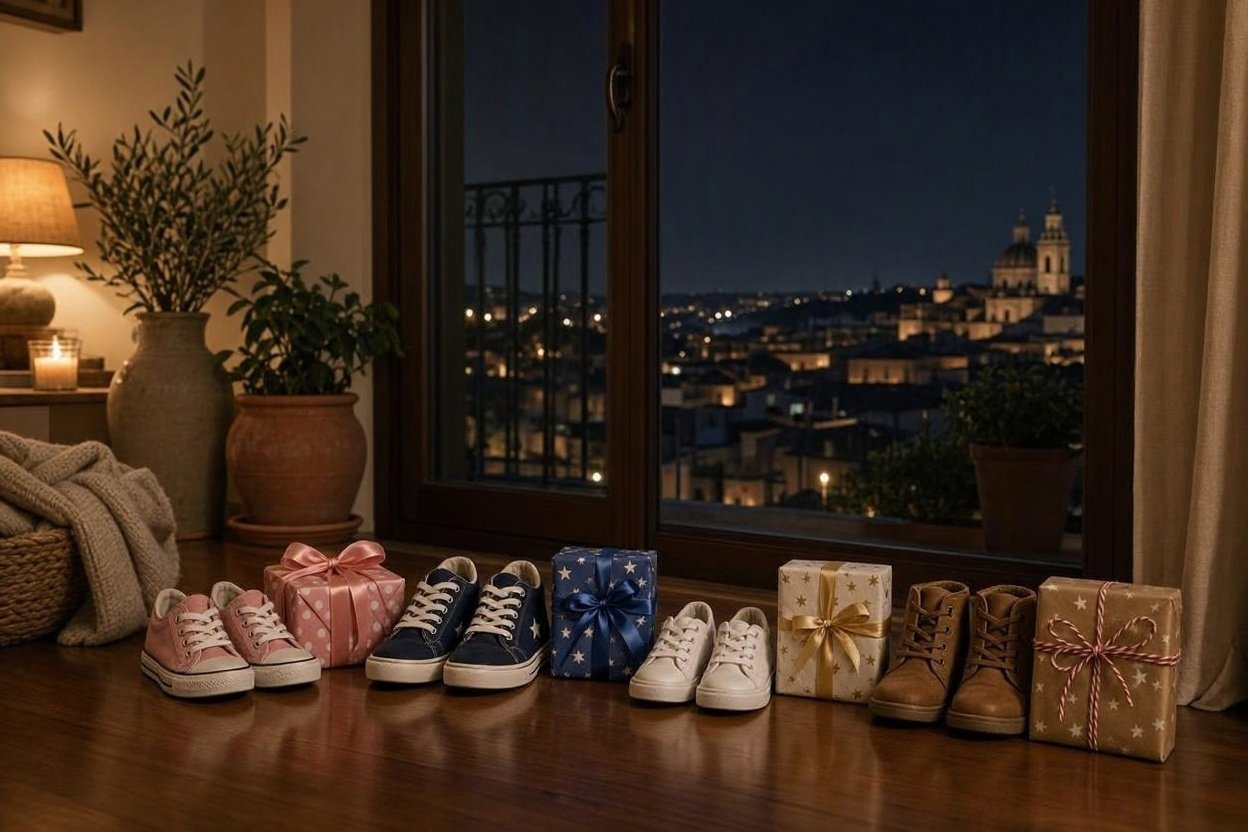
Epiphany on 6 January marks the day the Three Kings arrived in Bethlehem with their gifts. In the weeks before, children write letters to the Kings, and special Kings' postboxes appear in cities. On the evening of 5 January the Kings parade through towns across Spain, with floats and sweets thrown into the crowd. Back home, children put out their shoes, not stockings, for the Kings to fill during the night (Lonely Planet).
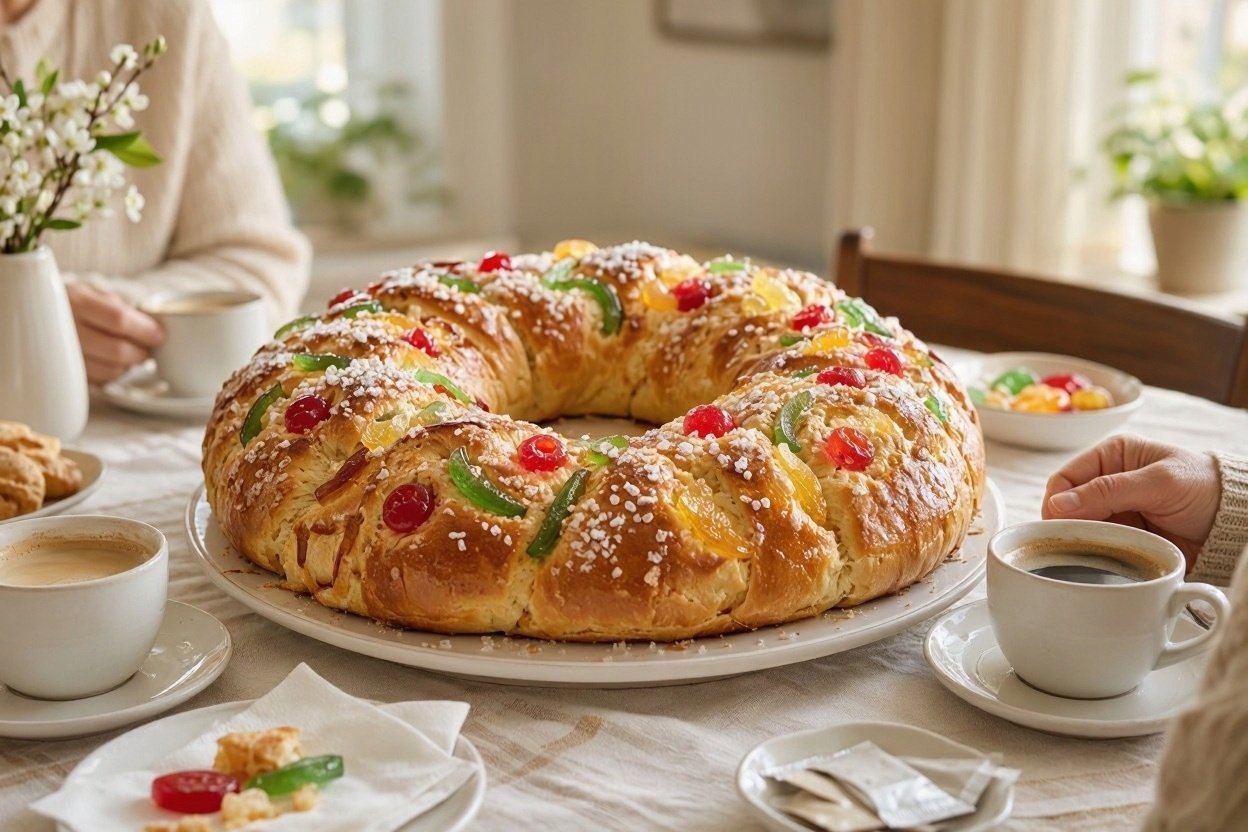
On 6 January many shops close and families celebrate at home, exchanging gifts and eating the Roscón de Reyes, a ring-shaped Kings' cake (Lonely Planet).
Birthdays and visits
Friends of the parents bring gifts to children on their birthday. Among adults, birthday gifts are less common: the person celebrating often treats friends to drinks instead (Evason, 2025).
What to give: gifts people in Spain appreciate
For a dinner invitation bring something to share: a good bottle of wine, chocolates or pastries. Flowers are less usual because they cannot be shared. For the Kings, toys, books and games for children, and for adults something for the table or the kitchen. Remember that the thought counts more than the price (Flynn & Adams, 2009). Compare dinnerware and gifts for kids on Fashnal.
What not to give: gift taboos in Spain
- White lilies and chrysanthemums: usually given at funerals (Evason, 2025).
- Red roses: they mean romance, so not for a host or a colleague.
- Badly wrapped gifts: try to wrap beautifully.
How to give a gift in Spain
Hand the gift over in person and expect it to be opened straight away, so the receiver can comment on it and thank you face to face (Evason, 2025). A gift keeps a relationship going rather than paying for something (Sherry, 1983).
5 gift ideas inspired by Spain
| Gift | Why it fits | Where to look |
|---|---|---|
| Spanish turrón | The classic Christmas sweet to share. | See on Amazon |
| Spanish olive oil gift set | A quality food gift for a host. | See on Amazon |
| Paella pan | For a family that loves long meals. | See on Amazon |
| Board game for the family | A Kings’ Day gift the whole house plays. | Compare on Fashnal |
| Dinnerware set | For long Spanish lunches. | Compare on Fashnal |
Frequently asked questions
When do Spanish children get presents?
Mainly on 6 January, from the Three Kings, after the parades on the evening of 5 January. Many families also give some gifts at Christmas.
What should I bring to a dinner in Spain?
Something to share: wine, chocolates or pastries.
Do Spaniards open gifts immediately?
Yes, gifts are usually opened right away in front of the giver.
More gift traditions around the world
Read how gifts are given in Italy, Mexico and France, or see all our guides to gift-giving around the world.
As an Amazon Associate, Fashnal earns from qualifying purchases. If you buy through a link on this page, we may earn a commission at no extra cost to you.
References
- Evason, N. (2025). Etiquette. In Spanish Culture. The Cultural Atlas. theculturalatlas.org
- Lonely Planet. Epiphany in Spain: Three Kings Day. lonelyplanet.com
- Sherry, J. F., Jr. (1983). Gift giving in anthropological perspective. Journal of Consumer Research, 10(2), 157–168. https://doi.org/10.1086/208956
- Flynn, F. J., & Adams, G. S. (2009). Money can't buy love: Asymmetric beliefs about gift price and feelings of appreciation. Journal of Experimental Social Psychology, 45(2), 404–409. https://doi.org/10.1016/j.jesp.2008.11.003
Comments (0)
No comments yet. Be the first to share your thoughts.
Sign in to comment