
Gift-giving traditions in the Philippines at a glance
The Philippines has one of the world's longest Christmas seasons, and gifts are a big part of it. Filipinos put real thought and care into presents, and wrap them beautifully. This guide covers gift-giving traditions in the Philippines and the etiquette around them.
- Gift season: Christmas, which starts with the "-ber months" in September (Western Union).
- Biggest gift night: Noche Buena, the family feast on Christmas Eve.
- Good gift: sentimental, thoughtful or practical, and well wrapped (Scroope, 2025).
- Opening: gifts are often set aside and opened later, not in front of the giver.
When do people in the Philippines give gifts?
A Christmas that starts in September
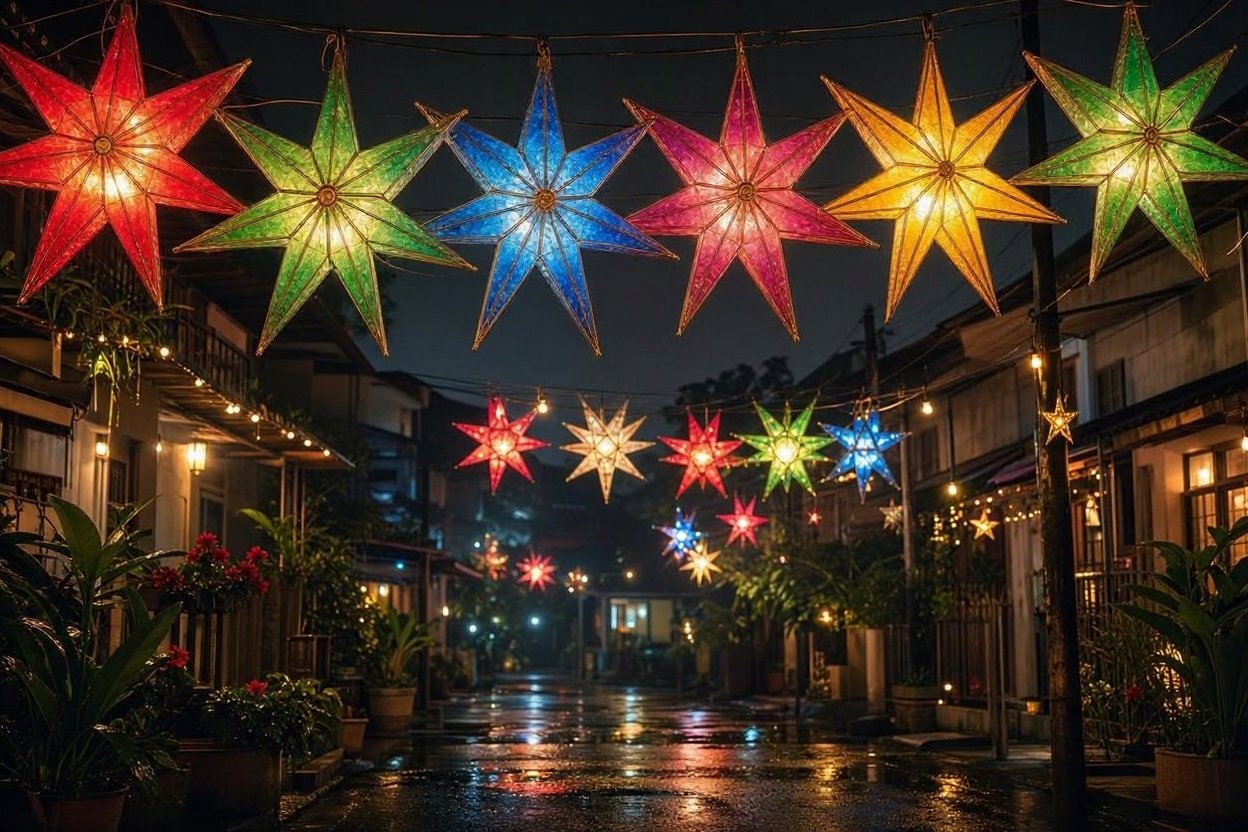
When the "-ber months" arrive in September, decorations go up, Christmas music starts and families plan gatherings and gift exchanges. The star-shaped parol lantern is one of the season's best-loved symbols (Western Union).
Simbang Gabi and Noche Buena
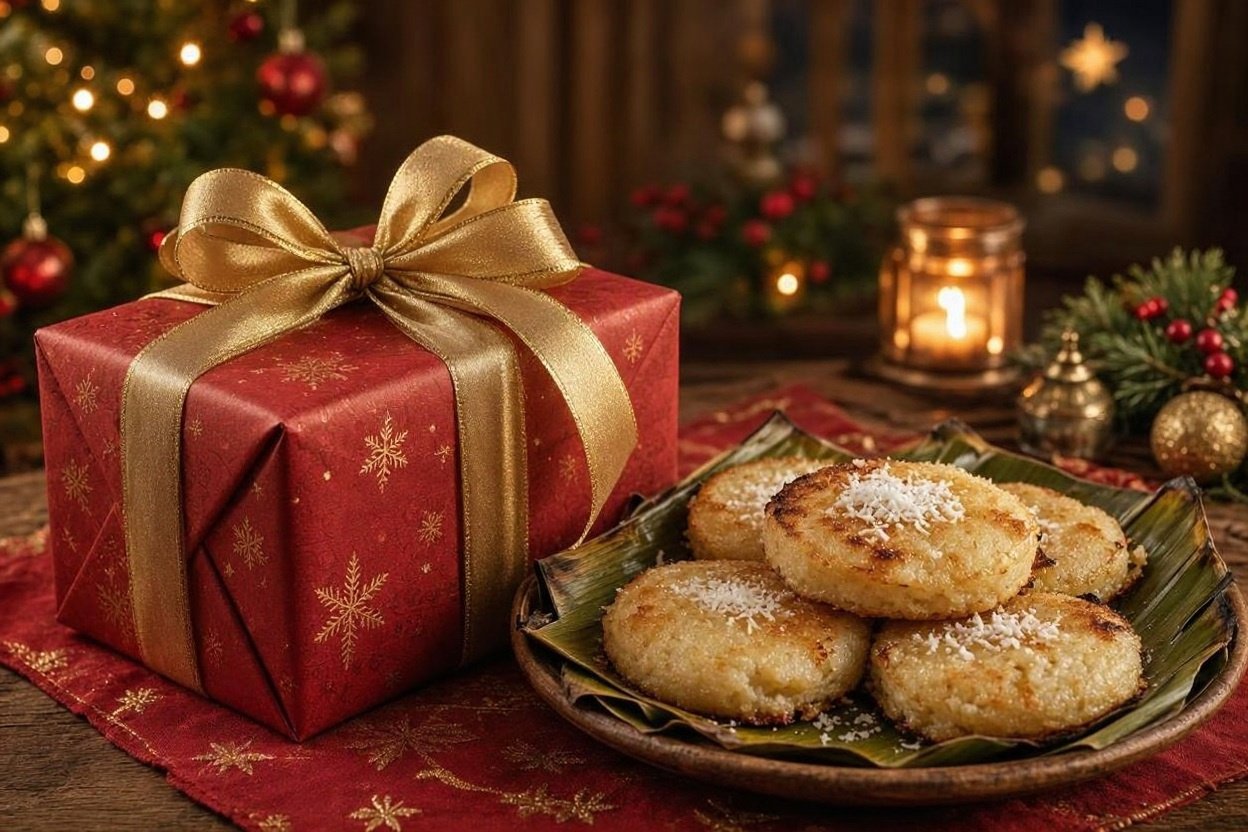
From 16 December, many Filipinos attend Simbang Gabi, nine dawn or night Masses ending on 24 December. Afterwards people buy bibingka and puto bumbong rice cakes, often to take home and share with family (Philstar, 2023). On Christmas Eve, families gather for Noche Buena, a feast where relatives reconnect, share stories and exchange gifts (Western Union).
Family far away
Many Filipinos work abroad and send money or gifts home so the family can prepare Noche Buena and buy presents for children and relatives (Western Union).
What to give: gifts people in the Philippines appreciate
Filipinos often give sentimental, thoughtful or practical gifts (Scroope, 2025). Good choices are food to share at Noche Buena, something for the home or kitchen, toys for the children of the family, or a personal gift that shows you remembered something about the person. The thought counts more than the price (Flynn & Adams, 2009). Compare gifts for kids and home gifts on Fashnal.
How to give a gift in the Philippines
Presentation matters, so take care with paper and ribbon. Do not be surprised if the receiver thanks you and puts the gift aside: gifts are generally not opened when received (Scroope, 2025). A gift keeps a relationship going from year to year (Sherry, 1983).
5 gift ideas inspired by the Philippines
| Gift | Why it fits | Where to look |
|---|---|---|
| Gift basket of treats | Something to share at Noche Buena. | See on Amazon |
| Kitchen set | A practical gift for the family cook. | Compare on Fashnal |
| Toys for the children | Kids are at the centre of a Filipino Christmas. | Compare on Fashnal |
| Parol lantern | The Filipino Christmas star for the home. | See on Amazon |
| Photo frame or album | A sentimental gift for family far apart. | See on Amazon |
Frequently asked questions
When does Christmas start in the Philippines?
Unofficially in September, with the start of the "-ber months".
What is Noche Buena?
The family feast on Christmas Eve, a time for reconnecting with relatives and exchanging gifts.
Do Filipinos open gifts right away?
Usually not. The receiver often thanks you and opens the gift later.
More gift traditions around the world
Read how gifts are given in Japan, South Korea and Australia, or see all our guides to gift-giving around the world.
As an Amazon Associate, Fashnal earns from qualifying purchases. If you buy through a link on this page, we may earn a commission at no extra cost to you.
References
- Scroope, C. (2025). Etiquette. In Filipino Culture. The Cultural Atlas. theculturalatlas.org
- Philstar.com (2023). Christmas in the Philippines: Why Simbang Gabi is an important Filipino tradition. philstar.com
- Western Union. Filipino Christmas traditions. westernunion.com
- Sherry, J. F., Jr. (1983). Gift giving in anthropological perspective. Journal of Consumer Research, 10(2), 157–168. https://doi.org/10.1086/208956
- Flynn, F. J., & Adams, G. S. (2009). Money can't buy love: Asymmetric beliefs about gift price and feelings of appreciation. Journal of Experimental Social Psychology, 45(2), 404–409. https://doi.org/10.1016/j.jesp.2008.11.003
Comments (0)
No comments yet. Be the first to share your thoughts.
Sign in to comment